Wednesday, December 6, 2006

TV

Usually, I don’t have that much time to watch TV but sometimes I try to watch some programs and series to get to know how the American society functions.

I don’t have a cable service. So all the channels I can get through the antenna on my TV are the main local channels like 6abc, CBS3, NBC10, Fox 29, MyPhl17, CW-Philly and some other religious and commercial TV stations.

The kinds of programs I see here are almost 100 percent different than the ones I used to watch in the Arab World.

Unlike some of the famous programs like Oprah and Dr. Phil which are also broadcasted on Arab channels, there are some programs that are far from being mentioned. I like watching some of them while I feel disgusted when I see the others.

My favorite channel that I always switch on the TV at is MyPhl17. It’s the kind of channel that mainly presents entertainment. Friends, Will & Grace, and According to Jim are my most favorite TV shows ever. I used to watch them on the Saudi-funded and Dubai-based MBC4, except for “Will & Grace” which contains “gay” stories that are completely forbidden on most-if not all- of the Arab channels.

One of the programs that drew my attention lately is called “Cheaters.com”. From CHEATERS® surveillance cameras, people are able to view actual true stories, filmed live, documenting the pain of a spouse or lover caused by infidelity. This show revolves around spouses, boyfriends, girlfriends and fiancĂ©es who have sought the help of "Cheaters" private investigation services to find out if their partners are really cheating or not.


The program is hosted by Joey Greico and each week features a new tormented male or female who waits for the results of surveillance done on his/her partner by the "Cheaters" secret cameras. As expected, the act of infidelity is proven and, after showing the betrayed guy or gal with grainy, poor quality footage of their sweetheart's unfaithfulness, Greico and the betrayed lover go to confront the person in question.

I liked this show because it makes a change! It helps reveal secrets.

However, there are other programs on the same channel that I really don’t like. One of them is called “Jerry Springer”.

Before I go to work or school every morning, I turn on the TV as I have my little breakfast hoping I could see something that may make my day. It strikes me to see this “Jerry Springer” is broadcasted at 8 or 9 a.m. every morning showing all these men and women fighting each other like animals.

Unlike Cheaters.com, Oprah or Dr. Phil, Jerry Spring’s show reveal problems of cheaters, spouses, relatives and others in a very disgusting way which is by letting the two parts fight each other on the stage while a dozens-people audience shout and scream as if they are watching a kickboxing game.

In one scene, I remember Spring presenting a man who cheated on his wife five times. This man came to the studio to apologize to his wife. The wife and the mistress met up there as well. They were indulged in a sever fight that is even worse than the ones I saw in a cockfight. They tore the clothes of each other in front of the audience making people jump out of happiness to see the boobs and the nipples of these two women whose man was standing at the corner proud of what he has created.

In another scene, a woman challenged a man that she could show her boobs live in front of the camera and she did it. She kept her T-shirt up for few minutes letting people enjoy looking at them as they whistled and clapped.

I really don’t know what to make of that image. It was supposed to be sexy. I found it disgusting instead of sexy. What kind of woman does that on air? I think it’s better to get some porn magazines or websites to enjoy cool sex images. At least women there know what they are doing!

In the middle of all of these disgusting footages, Jerry Springer moves happily joking and laughing at the absurdity of the stories he brought to his show. I maybe the only one who feels that this show is so frustrating and disgusting despite the fact that women tear clothes and fight in a very sexy way. For me, women should be more respected that being shown in such a cheap way. Thanks to Oprah and Dr. Phil who present real problems in a very respectful ways.


baghdadtreausre@gmail.com

Oh My Daughter


An Iraqi sobbing over the body of his daughter who was killed by an explosion in Baghdad this morning.

Tuesday, December 5, 2006

Threatening Leaflets distributed in Baghdad

Civil war in Iraq has reached its peak. Everyday a new aspect of life dies. People are killed continuously in massacres that harvest more than 500 lives in one week.

Out of this civil war, education has its share. Schools are barely functioning to educate the new generations of Iraq.

After the U.S.-led occupation to Iraq, education deteriorated form its steady situation where students and professors were able to exchange knowledge despite the oppression of the former regime and the U.S.-U.N. sanctions against the Iraqi people.

Last November, Gunmen in military-style uniforms abducted scores of staff and visitors from a Higher Education Ministry institution in Baghdad. The attackers stormed the ministry's research department, locked women in a room and took the men away. As a reaction to this, the Higher education minister ordered all universities to be closed fearing a new wave of abductions reach the university campuses.

The minister’s fears were right. However, the new fighting-education campaign took another style. The militant’s aim seems to be not to kill professors rather than kill education itself. They started new techniques in destroying the long-term good education in the country.

Last week, a friend of mine told me that the former chair of the English Department in my university in Baghdad fled to northern Iraq. She told me he became miserable after armed men kidnapped his son, beheaded him and sent his head in a box.

Today, my sister called me from Baghdad. She said most of the students are either unable to go to the universities or unwilling to due to the kidnappings and bombings. In the latest incident, she said, armed men distributed leaflets in the University of Technology, the major engineering university in allover Iraq, threatening students and professors to be killed if they come to school. She added that the whole university has been shut down since last week.

In today’s edition, Azzaman newspaper reported that an “unknown group distributed leaflets to university students in Adhamiya and Yarmouk neighborhoods banning them from going to schools.” The paper added that the same group “excluded the elementary and high school students” from this campaign and “promised not to hurt them.”

Residents of Adhamiya told the paper that yesterday’s leaflets caused a huge panic among the residents and the students who stopped going to their schools after these threats.

A university professor who spoke to Azzaman on condition of anonymity said he was shocked when he saw one of the leaflets at the footstep of his house. He said fear haunted him and made him decide not to go to school fearing these groups’ threats.

In Abu Ghraib, an area in south western Baghdad, another unknown group distributed same leaflets threatening students from going to the Agriculture college of Baghdad university which is located in that restive part of the city.

People in Azzafaraniya, an eastern Baghdad neighborhood, said that armed groups threatened students of the Technical Institute to be killed if they come to school.

The Higher education ministry sources did not comment on most of these incidents, Azzaman said. The source didn’t say much but told the paper that the “government promised to increase the security measures in the universities and institutes.”

UPDATE:

Lady Bird of "Roads to Iraq" posted two of the leaflets mentioned above. However, there is a slight difference from the ones which Azzaman newspaper mentioned. They might be other leaflets.


"To the youths of the future, your lives are part of the live of the nation. So save it by not going to the universities and institutes of Baghdad in order not to be an easy target for the death squads."


"From these universities, the scholars and holy warriors graduated and at their gates, they are being killed.

To protect the lives of our dear professors and students from the assassinations that Maliki’s rejectionist [Shiite] government and its death squads are carrying out, it has been decided to stop schools for this academic calendar in all the Universities and institutes in Baghdad.

It is completely prohibited going to school after this announcement."


baghdadtreasure@gmail.com

Sunday, December 3, 2006

Abu Deraa

In early 1970s, Baghdadis feared a serial killer nicknamed, Abu Tubar, Father of Hatchet. The hatchet man was a Baathist-made criminal who managed to scare Baghdadis to distract them form the Baathist crimes. He succeeded to make them lock up their doors at nights and to march armed in the streets to be protected.

When I was young back in the 1980s, life was normal despite the ongoing war with Iran. However, there were some rumors about some other criminal gangs like the al-Kaf al-Aswad, the Black Palm gang, wandering in Baghdad and klling people after robbing them. I remember how these gangs were part of the daily life and fear of Baghdadis. They were the talk of the town.

It didn’t take Iraqis so long to go back to their normal lives after the former regime allegedly managed to capture these criminals and submit them to “justice”.

However, when I look back to history and compare what is happening in Iraq now, I see Iraqis witnessing a new era of crime and inhumanity. Instead of one Abu Tubar, we have several. There is an American Abu Tubar, a foreign Arab Abu Tubar, a Shiite-Mullah Abu Tubar, a Sunni-Anbari Abu Tubar, a Sadr City Abu Tubar, and many other Abu Tubars.


Before he was killed by the Americans, Iraqis resembled Zarqawi with Abu Tubar. However, a new one emerged after his death. This time, he wasn’t a Qaeda guy or a Sunni from Anbar or Sallahuldeen. He was a Shiite from Sadr City, formerly known as Saddam City or al-Thawra.

The new Abu Tubar had unique and different nom de guerre, Abu Deraa, Father of the Armor, a reference to his penchant for attacking U.S. armored vehicles. He is known of having a big amusement in torturing his victims who most of them are Sunni civilians. One of his signature techniques is running a drill into the skull of his live victim, according to a recent Time article. His appetite for mayhem is so vast that some Iraqis call him the "Shiite Zarqawi"

In the picture Above, Abu Deraa is holding a U.S. soldier's helmet during the Najaf battle between the U.S. forces and the Mahdi Army.

In an exclusive interview, the new Baghdadi slaughterer replied to questions sent by Time:

Abu Deraa agreed last week to provide written responses to TIME's questions, which were passed to him by intermediaries. He says he is "honored" by comparisons to al-Zarqawi and claimed, implausibly, to have no ill will toward ordinary Sunnis. He says his fight is against "occupiers, their supporters and takfiris"--a reference to Sunni insurgents linked to al-Qaeda. He denied that he had kidnapped al-Taie, the missing U.S. soldier, but added, "I would be very proud if it was me who kidnapped that soldier, and I am very proud of any kind of accusation against me, especially related to [acts against] the occupiers and those who serve the occupation." He said he was motivated by a "sense of holy duty toward my faith [to fight] against any hostile enemy of my faith."


The magazine also provided a comprehensive background of Abu Deraa:

Abu Deraa was born Ismail al-Zarjawi to a poor family in Sadr City. After a career in petty crime during the Saddam Hussein years, he became one of the first recruits of al-Sadr's Mahdi Army after the dictator's fall. "When the Americans entered the country and kicked Saddam out, we were very happy," Abu Deraa says. "But then we discovered their bad intentions against Iraq, so we started attacking the occupation forces." In the spring of 2004 he participated in the Shi'ite uprising against U.S. forces in Sadr City. That was also when he earned his nom de guerre Abu Deraa, or "Father of the Shield," a reference to his penchant for attacking U.S. armored vehicles.

He saw more action that summer in Najaf and that fall in Fallujah, when a small detachment of Shi'ites fought alongside Sunni insurgents against U.S. forces. Back then, he says, "it was a real resistance, and there was no sectarian affiliation." Abu Deraa spent the next year consolidating his position as a Mahdi Army leader, first among equals of three commanders in Sadr City. Iraqi officials say this was when he turned to kidnapping for cash, which he used to buy weapons and lure recruits.


Iraqi Sunnis accuse Abu Deraa of killing thousands of Sunnis, not just political figures and militant Salafis, but ordinary civilians as well. On August 22nd, The Age, an Australian newspaper reported that Abu Deraa lured Sunni men to their deaths. Through interviewing a close associate to Abu Deraa, the paper reported that he commandeered a fleet of ambulances and drove them into a Sunni neighborhood in Baghdad calling on all young men to come and give blood, announcing on a loud speaker that "the Shiites are killing your Sunni brothers". The young men went to the ambulances and were trapped and killed.


A video recorded on a telephone camera and circulated in Shiite areas shows a man believed to be Abu Deraa conducting the kidnapping and assassination of Saddam Hussein's lawyer Khamis al-Obeidi. The video shows al-Obeidi emerging from a private residence, where he was undergoing interrogation, into a narrow alleyway. Al-Obeidi pleaded with his captors on the video, saying that he would lie beneath their feet and do whatever they wanted. Abu Deraa then tied al-Obeidi's hands behind his back and placed him in the back of a white Toyota pickup truck. Al-Obeidi was paraded through Sadr City, where the crowd threw stones at him and taunted him with Shiite slogans. He was hit on the back of the neck, an extreme insult in Arab culture. After being paraded through the slum, the vehicle stopped and Abu Deraa fired three shots into al-Obeidi's skull (The Age, August 22).


After going far in his crimes, Abu Deraa became hated even by some of his cleric leaders. Iraq for All, an Iraqi local news website reported that Muqtada al-Sadr himself dismissed 60 members, including Abu Deraa, from the Mahdi Army militia. However, the man was still considered a hero, especially by Shiite members in the parliament.


Falah Shansal, a member of parliament from the al-Sadr bloc, told Time last week that Abu Deraa was still "a fighter in the Mahdi Army."


Like most of the “wanted” insurgents, Abu Deraa was hard to be caught. He managed to escape several times until he was killed few days ago by a Sunni insurgent group. Azzaman newspaper reported that the Islamic Army, one of the insurgent armed groups, killed Abu Deraa. The group announced that in a statement. Azzaman said they received a copy of that statement which it quoted as :

“After two months of chasing the slaughterer of Baghdad, the blessed battalion was able to blow up the ambulance he was driving in [Sadr City], Amil and Shula neighborhoods and Balad.”

Thursday, November 30, 2006

The Baghdad Reunion


When it comes to vacations, I never say no. It has been six months since the last time I had a vacation with friends. I might have been lucky that I was able to do that when I was in Iraq last June by the time many other people were hardly leaving their houses to school or work.

The last trip I adventured was with my friends Ahmed and Safaa in Iraq. We went to Iraq’s Northern Kurdistan region where we had some of the best times in our lives. Mostly, it was a farewell trip. I decided to take the risk and have fun with my friends as I might not see them in my entire life again.

All that time, I was thinking about how my life was going to be in the US. Different thoughts came into my mind. The first one was how I am going to be a stranger in a new world that has a huge sensitivity against Arabs and Muslims.

When I left Iraq, I cried a lot. Not only for Iraq, but for myself. Everything around me started to change. No family, no friends, and no homeland to see. All faces become different since the airplane landed in Jordan. What eased the pain was Omar’s presence in Amman. We spent a great time together to overcome the sadness inside our hearts.

Shortly after I settled in Philadelphia, Jon, my American friend, came in Philly for a wedding of one of his friends. We met the next day of the wedding. At that day, he invited Omar and I to spend the Thanksgiving holiday with him and his family in Vermont. I didn’t know what Thanksgiving meant at the time but I knew it’s a holiday in which people serve turkey as a tradition.

Omar and I encircled November 23rd in our calendars to make sure we don’t have other plans on that day. We made plans for the trip. Jon and I were in touch to make sure everything goes perfect.

Since this holiday is one of the biggest in the U.S., Jon advised me to buy the ticket earlier. So I bought it few weeks before the holiday to make sure I find a seat on the train. Since then, I started preparing for it. I didn’t know what to do. I was so excited, not only about having a vacation but about seeing my friends. Although I have a wonderful group of friends now in Philly but my Baghdad friends lie in a special part in my heart. They are not only friends. They are part of my life in Iraq. The part that is engraved in my mind.


I’ve been in touch a lot with my friend Jill since I came to the U.S. Hearing her voice makes me feel hopeful, strong, and willing to go on with everything that makes me succeed. She is so much like my sister in Iraq whom I terribly miss. Jill was invited by Jon as well as my former bureau chief in Baghdad.

On Tuesday November 21st, I took my bags and went to the train station. I was very excited. The moment I entered the station, I received a text message from Omar saying his friend’s father was kidnapped. I was shocked! I thought it’s not the right time to hear bad news. I just needed to have fun, for God’s sake. As I read the message, million thoughts came into my mind starting from my neighbor who was kidnapped and then found tortured and dead. I called Omar. He was miserable. I tried to calm him down but in vain. It wasn’t only his friend’s father kidnapping but his brother who called him that day crying and pleading for help as well.

The train station was incredibly crowded. Neither I nor the people traveling with me found seats on the train. It’s the crazy holiday, one old woman complained as she was standing next to a young man in his seat looking at her and turning his face in dislike!

As I was making my way to find a seat after a 20-minutes standing, Omar called me. People started staring at me in daze as I spoke with Omar in Arabic. I stared as well and was about to say, “Why are you looking? I didn’t invade your country and abused your people!”. Oh well. I decided not to. I just wanted to have fun and ignore all those who looked at me as if I were an alien coming from another planet. I wonder when the Americans will get out of the bubble they live in.


I took the train to New Haven, CT where Jon lives. The plan was to travel to Boston to meet up with Omar, Jill and our friend and bureau chief. On the next day, we had lunch in a restaurant called “Louis’ Lunch”, a restaurant in New Haven famous for its hamburgers, which opened in 1895. The proprietors claim that Louis' Lunch was, in 1900, the first place in the United States to serve hamburgers as they are known today. Louis' Lunch refuses to sell a hamburger with ketchup or mustard. It's either cheese, tomato, or onion, or not at all. The Louis' Lunch hamburger is served on toast, not buns. As we were eating, one of the sign drew my attention. It read, “This is not Burger King. You don’t get it your way. You take it my way or you don’t get the damn thing.” It reminded me with a sign I saw in New York City last year when I was with Mad Canuck. The sign read, “Don’t even think of parking here.”!!


After that, we drove to Boston. On the way, two friends of Jon came with us. The trip took about two hours. During that time, I closed my eyes in the car to take a nap after a long day I had with Jon and his other friend exploring New Haven. As I closed my eyes, I thought about my family and other Iraqis. How many Iraqis were closing their eyes with tears falling on their pillows at that moment, I asked myself. I found no answer.

Finally, the reunion happened. We united again after a long time of nostalgia. I was very happy. I even forgot all the sad things at that moment. I felt I was in Baghdad, not in Boston. It was so weird to see them here.

Altogether, we went to Vermont where Jon’s family lives. Jon was driving while all of us chatted all the way to his family’s house remembering the old days in Baghdad with their sweetness and bitterness.

It was about 10:30 p.m. when I we arrived. We took our bags out of the trunk and marched towards the family house. As we stepped in, I noticed something familiar, the smell. It was like the smell in my house. With a big smile, Jon’s family welcomed us in their beautiful house. Dinner was served. We joined them eating a variety of delicious food.


The trip was long but I never felt tired. I was happy and excited. It was the very first thing that made me happy since I arrived in the States. After dinner, Jon directed us to our rooms. The room which Omar and I shared was his brothers’. A blue-colored square room decorated with pictures of him and his brothers playing hockey. A group of prizes were lined up on the bookcases and dresser marking the brothers’ achievements in sports.

Before we slept, Omar and I went to Jon’s room. It was his room since he was born. A nice small room that almost looks like his brothers’. I asked him to show us old pictures of him. He grabbed some photo albums. The three of us sat on the bed and saw the pictures of young and teenage Jon. We laughed as if we have never laughed before. Then Jon pulled a flute that looks like my father’s. He started playing. Silence followed. He played the Iraqi National Anthem. Omar and I looked at each other in happiness. “How did you do that?” I asked Jon happily. He smiled and didn’t answer. I couldn’t believe that this was not a dream. I couldn’t even imagine that three of us who used to laugh, joke, and sometimes fight in Baghdad were together again. It was such a nice feeling. I think I wouldn’t be able to be fair in describing it.

We went to sleep. I was so excited that I couldn’t sleep at first. I closed my eyes and a flashback of memories of my life with my friends at the office came into my mind.


The next day, I didn’t wake up early. I heard the sound of the anthem again. I immediately knew it was Jon. He was playing it at the door to wake us up. It was such a great start that made my day. I took a shower after Omar did and went down to have breakfast with the whole family. We had breakfast and then we started chatting to get to know each other.

Jon has such great parents. His father is exactly my father, an educated, calm man whom you like from the first word he speaks. His mother is so lovely. She reminded me with my mother, a smiling happy woman whom everybody loves. Jon’s sister, a public school teacher, is so friendly and his brother, a painter, looks like him a lot.

The weather was great. It was chilly but sunny. Jon, Omar, and our bureau chief and I decided to have a walk in the meadows that encircle the whole house. Jill was still asleep by that time. We put on our coats and went out enjoying the wonderful nature that almost looks like the nature in northern Iraq.

Unlike its overdeveloped neighbors to the south, east, and west, Vermont was a state of nature. The meadows were green despite the cold weather. The trees were lined up next to each other like a comb. The air was fresh and mixed with the smell of the grass and the leaves on the trees. I was walking joyfully. I wanted to dance, to jump and be crazy. I imagined my family and friends in Iraq with me. I wanted them there enjoying this beautiful piece of heaven. I loved everything there, even the green and black mail boxes that reminded me with the American cartoons we used to watch when we were kids. We returned back and saw Jill awake. So we decided to have another tour. This time, it was by car. We went to the downtown. We joked, laughed, and took pictures to record these wonderful times.
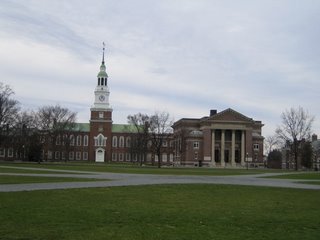


At lunch time, the house was amazingly crowded by friends and relatives. They were all lovely and friendly. When I was among them, I never felt I don’t know them. They were like my family. As we were having lunch, Jon’s father turned on the CD player and put an audio CD of Iraqi songs and music. Naseer Shamma playing his wonderful lute pieces and Kadhum al-Sahir singing happy songs. I found out later that he burned them on a CD from the internet specifically for us, Omar and me. “No, don’t sigh,” al-Sahir sang. “Laughter will be back in a while and the fire in your chest will quell.”

The song came at the right time. I felt a little bid sad as I heard the news of the car bombing in Sadr City and the tension that happened afterwards. I didn’t know about until a produce from the BBC radio called me and told me about it. I was so worried about my family. Jon’s father handed me the phone to call them and make sure they are OK. When I called them, they tried to hide their fears and asked me to enjoy my time and never think about what is happening there. It was impossible, of course. However, I felt relieved to hear their voices. I needed to know they were still alive and nothing bad happened to them.


It was the Thanksgiving night. Food was made joyfully by most of the family members during the whole day. Jon’s mother made the turkey. Before dinner, Omar lit the candles in the chandelier in the big room, which was built in the late 1700s. After that he brought his computer and made Jon’s entire family enjoy watching a slideshow of Jon’s photos with us in our Baghdad Bureau. As they sat lined up at the sofa and the floor, they stared and laughed out loud at the funny pictures that Jon and we took in the Baghdad Bureau. They were historical pictures of a group of friends going through happy and sad times.

At 5 p.m., we gathered in the big room. Jon’s father installed his high-tech camera and put it on a timer. We took our seats and the camera shot three photos of all of us. Before we dug in, Jon’s father gave a toast. He welcomed all the attendees-family and friends- and invited all of us to visit his wonderful house and family again.

After dinner, we enjoyed deserts while chatting and talking about different topics. Then, we went to the living room to watch TV. One of the channels was showing “Live from Baghdad, a movie about how CNN crew covered the 1991 Gulf war in Iraq. Personally, I didn’t like the movie as there were so many untrue details in it like the information minister sipping tea with the CNN reporter who appeared smoking in Saddam’s palace before interviewing him, not to mention the painters drawing Saddam’s visage in the middle of the street. All these never happened because Saddam was very strict about such things.


The next day, we spent the whole day touring in the city. At night, we were divided into two groups. We went to the movies. Jill, two of Jon’s best friends and I watched Babel while Jon, Omar and our bureau chief watched “The Queen”. Tow days later, Jon, his sister and I drove back to New Haven while the others returned back to their homes by train, bus, and airplane.


It was such a wonderful trip. It was nice not only because of the place but because of the warmth and loveliness of all the people I met there. I will never forget it in my entire life.

baghdadtreasure@gmail.com

Tuesday, November 28, 2006

Not yet?!

It strikes me to see how the world has not realized yet that Iraq is already going through a civil war. Amidst all the bloodshed, politicians and officials show up on TV and say Iraq is NOT yet going through a civil war.

Kofi Annan has said publicly Iraq is teetering on "the brink of civil war". Most U.S. officials say that the violence in Iraq is called a sectarian strife and not a civil war. Only Iraqis themselves realized that what is happening now is no longer strife and the long-term unity they enjoyed before has no place among them anymore.

I don’t know how the U.S. national security adviser Stephen Hadley spoke on behalf of Iraqis few days ago. He said, "The Iraqis don't talk of it as civil war." Where did he get that from? He never asked me! He’d never been to Iraq. He represents his country’s views, not ours. So how come he speaks on our behalf?!

The uproar taken place in the Middle East became the center of attention these days. Maliki and Bush are going to meet up in Jordan. Talabani is in Iran discussing the same issue. But the solution for the real problem, which seems no one realized yet, is not by talking to neighbors. It is solved by talking to ourselves.

Iran and Syria are the first words Bush always says after the word “terrorism” when he shows up on TV with his useless remarks. Yes, these two countries are part of the problem but they are not the main problem. Let’s try to concentrate on what are the mean reason behind this civil war and try to solve them. Foreign fighters coming from Syria, Jordan, Saudi Arabia, Kuwait, and Iran are not the main reasons now. Have you read lately a foreign fighter blew himself up? No, you hear and Iraqi [Shiite or Sunni] blew up himself or shot someone dead.

I really don’t know why the U.S. administration does not want to focus on the real crisis instead of talking continuously about “terrorism”. It’s either they know the problem and don’t want to admit it [as they would look like losers] or they are trying to fool the American people by these slogans to ensure them that they are fighting “terrorism” by the time they increased it.

Now what is that internal problem? It is the Iraqi government. Yes, it is! You are going to say but it is elected. Yes, it IS elected. But have you asked the Iraqi people’s opinion of that government now? Did you hear how Maliki’s motorcade was attacked in Sadr City by people throwing stones? Who did that? Weren’t they the people whom he was elected by? Why don’t they like him now? Did you ask yourself why? They believe in their clerics militias now more than Maliki, his government and the parliament. Simply because Sadr and his militia are more powerful than Maliki. People always look for the powerful to be protected.

The government let the people down. Maliki is only a puppet and a mouthpiece of Bush. His government is only a face of fake democracy Bush claims he brought to Iraq. It is corrupt from head to toe. Militiamen are members of the security forces. They kill whoever they like and however they like, mostly by torturing the hostage first. They are not loyal to Iraq. Their loyalty is addicted to their clerics like Abdul Aziz al-Hakim and Muqtada al-Sadr.

What about the parliament? It is even worse than the government itself. Sunni politicians who were involved with insurgency-whether Iraqi or foreign- are no better than the Shiites who always defend their militias like the Mahdi Army and the Badr Troops. Well-known parliament members are known of their loyalty to these insurgents. The Iraqi Islamic Party, Adnan al-Dulaimi [who was behind Jill’s kidnapping], Salih al-Mutlaq, Mishaan al-Jubouri [whose banned channel broadcast footage of insurgency fighting in Iraq and songs of the former regime] and of course, Tariq al-Hashimi who is now the Vice President of the country.

What a blend of thieves, thugs and criminals running Iraq!

What about the secular politicians? Where are they? Probably enjoying the chilly weather in Britain or the U.S. using their second nationality. I used to like Allawi as he seemed to be a good leader. But where is he now? Why did he disappear? Where is Chalabi? Oh I forgot! He stole millions of dollars and went to enjoy them in his second country.

I exclude some secular members who really want to solve the problems but they are powerless among the hundreds of Shiite and Sunni fighting and hateful members. I’ve seen them arguing and exchanging insults when I covered some of their sessions in Baghdad. You may think this is democracy. If this democracy divides my country and kills my people, I don’t want it. Take it back and bring me back my life and my unified Iraq.

I do hope from the bottom of my heart that we revolt against this new, oppressive regime and restore our Iraq back. I know this would never happen because those who think like me are either killed by these militias and insurgents or had to leave the country after receiving death threats.

Monday, November 20, 2006

Killing Laughter

This morning, I heard the news of the assassination of one of the funniest Iraqi comedians. It seems there is no place for laughter anymore, even when people are locked up inside their houses watching TV.

Here are the details:

BAGHDAD, Nov 20 (Reuters) - One of Iraq's best known satirists and broadcasters was gunned down on his way to work on Monday, his colleagues and the police said.

Waleed Hassan's "Caricature" sketch show was an unmissable part of weekend Fridays for Iraqis seeking a release in laughter from the blood and chaos around them. Hassan poked fun at sectarian violence, bickering politicians, power blackouts and all aspects of the turmoil that is daily life in Iraq.

He was found in west Baghdad with three bullet wounds to the head, said the Sharkiya channel. Hassan was a director of the station and also produced a political interview show for it.

As with other media, several journalists and employees of Sharkiya have been killed. Owned by a London-based Iraqi businessman it takes an independent editorial line, though many viewers see it as leaning toward minority Sunni Arab viewpoints.

"We feel we're all at risk," a senior journalist at Sharkiya told Reuters. "We all think of quitting the station."